
A jammed lock does not, by itself, identify who must pay. Routine maintenance, age-related wear, a lost key and damage are different situations. Start by describing what happened and having the cause assessed, rather than allocating the bill from the symptom alone.
Residential leases are governed by regional rules
Identify the property's region, the type of lease and its date. These official sources concern residential tenancies; a rule for one case or region does not automatically apply to the others.
- Brussels: the repair-allocation guidance (French) distinguishes maintenance and tenant repairs from work caused by age or force majeure. Normal use therefore does not make all maintenance the landlord's responsibility.
- Wallonia: the SPW explains tenant obligations (French), including maintenance and reporting defects. Damage attributable to the tenant is distinguished from repairs arising from normal wear, age or a defect.
- Flanders: articles 25 and 26 of the Flemish Housing Rental Decree (Dutch) distinguish landlord repairs from minor tenant repairs, with exceptions such as age-related wear. Check whether it applies to your lease, including its date.
Lost key, maintenance or worn lock: three different situations
A key is lost
Notify the landlord and identify what the key opens: the apartment, shared entrance, garage or mailbox. Distinguish replacing the key from replacing the locks. The Flemish guide ZieZo!, section 12, pages 59–60 (Dutch) puts lost-key replacement on the tenant; a subsequent landlord decision to replace the locks is treated separately, at the landlord's expense. Do not extend this to all of Belgium.
The lock needs maintenance or has developed a fault
A stiff key does not prove poor maintenance or age-related wear. Ask for the affected part, its condition and the proposed repair to be identified. Have any uncertainty about the cause recorded too. Our lock that will not turn guide helps describe the symptoms without forcing it.
The key also opens a shared door
Mention this before choosing a cylinder. The manager needs to check the key system and which access must be retained. Avoid ordering a part that is incompatible with the shared entrance or garage; a photograph cannot establish the reference with certainty.
What should you prepare for the landlord or insurer?
Record the facts and the agreement on the work. An invoice documents a service; it does not settle a dispute or guarantee reimbursement.
- Before the visit: note the date, affected door and what has stopped working. Keep the relevant check-in inventory and messages to the landlord.
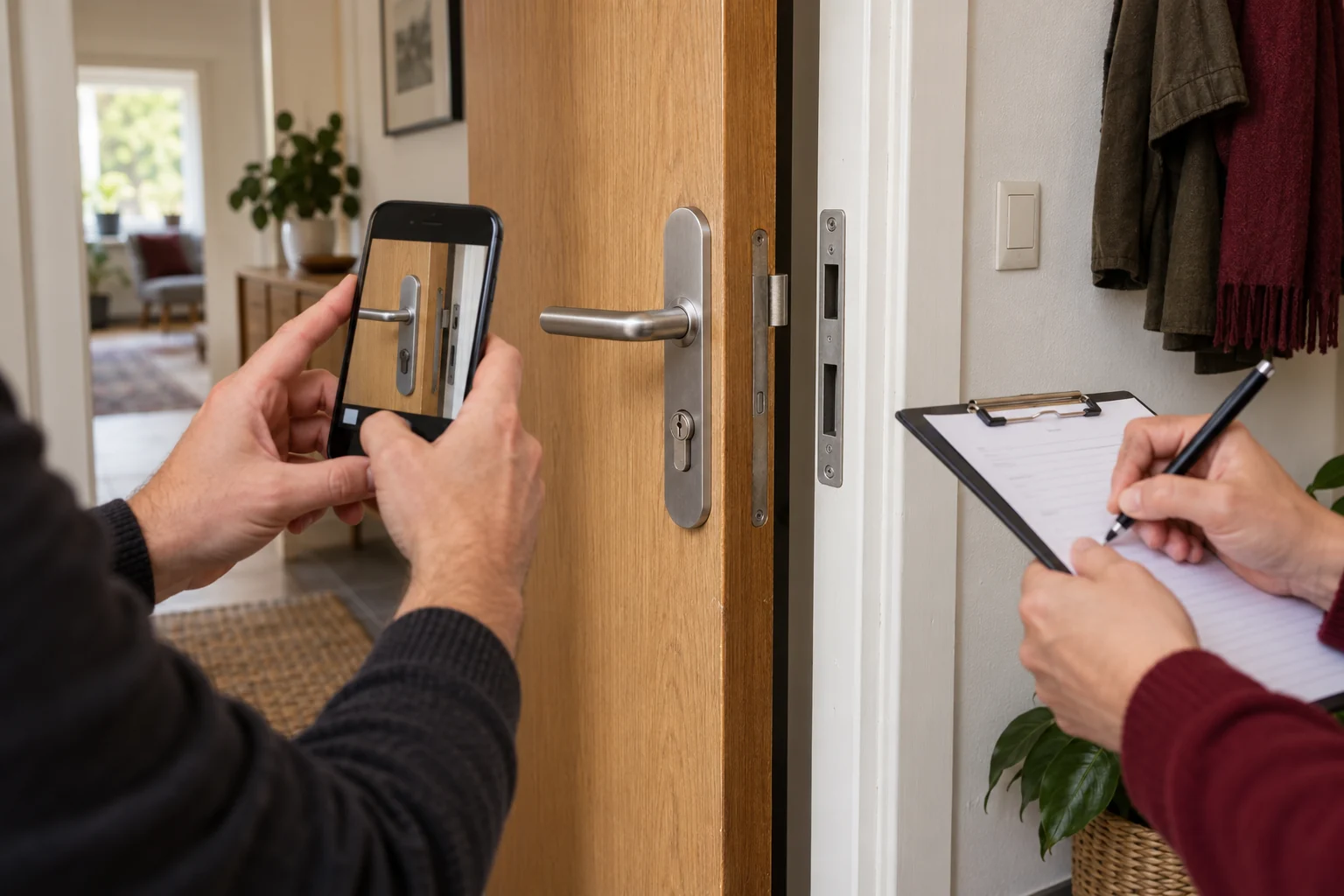
- Useful photographs: an overall view of the door and affected area, without dismantling anything. The illustration shows this documentation, not a customer. Hide private addresses, codes and key cuts.
- Agreement: specify the opening, temporary securing or replacement that is authorised. Ask for the total and surcharges before agreeing; our locksmith quote guide explains the items.
- After the work: keep the itemised invoice, installed part references, available findings and correspondence about payment.
For an urgent fault or after a break-in
If the door cannot be secured, say so immediately and contact the landlord or manager as soon as possible. Distinguish necessary securing from permanent replacement. Report a potential claim to the insurer and ask for its conditions and supporting documents; do not assume reimbursement. Our after a burglary guide covers the initial steps.
Prepare proof of your right to access the property. Travel, availability and the scope of work are confirmed for your address before agreement. Describe a blocked door or call 0495 205 400.
Regional sources consulted on 3 October 2026. General information to prepare for a visit, not a legal determination of your case. For a dispute, contact the regional housing service or a legal professional.