
A key that resists can indicate a problem with the key, cylinder, lock or door alignment. Stop forcing it. These checks help describe the fault; they cannot establish a certain diagnosis remotely.
First, a simple test: door open or door shut?
If the door is already open and can safely stay open, observe the mechanism without force. Do not close a door with a sticking lock. For automatic, fire or shared doors, follow the building manager's instructions.
- The key turns with the door open but resists when closed: misalignment is possible. This does not prove the cylinder or lock is undamaged.
- The key also resists with the door open: the key, cylinder or lock mechanism may be responsible. An inspection is needed to distinguish them.
Note the door position, any noise and where the resistance starts. These observations help prepare the call-out.
Compare the keys without making the fault worse
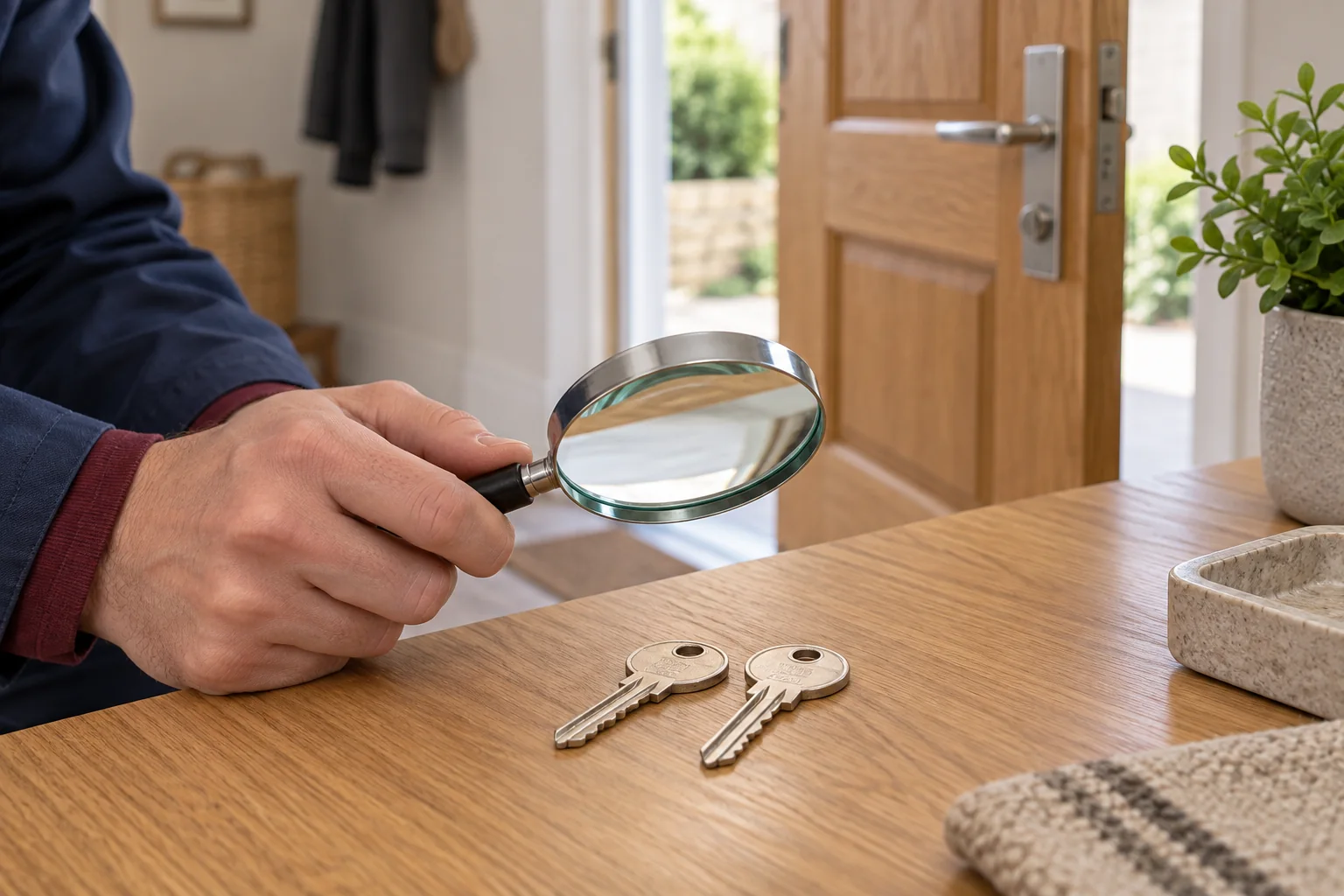
The illustration shows a visual check, not a repair. Look for deformation or a different wear pattern on the usual key compared with the spare. Do not straighten it, file it or turn it with a tool. Keep both keys so the technician can compare how they operate.
A key that spins freely is a different symptom: see the guide to distinguishing cylinder and lock case faults. If it will not come out or has snapped, describe a trapped key or a broken key instead.
Is another key still inside?
A key left inside can prevent the outside key from working without the cylinder being broken. The emergency function explained by ABUS depends on the model. Mention this without forcing either key; do not assume every cylinder has this function.
The most common causes
The cylinder is worn or clogged
Dirt, wear or corrosion can affect a mechanism. The age of a lock alone cannot identify the fault or justify replacement.
It's the key that's worn, not the lock
If you have an undamaged spare key, try it gently. If it works better, the first key may be damaged. A difference between two keys does not rule out a sticking mechanism.
The door has dropped or swollen
A sagging or distorted door can put pressure on the bolt. Mention any rubbing or recent change in how the door closes. Avoid lifting the door by its handle or adjusting the strike plate without a diagnosis.
Frost
Frost can affect an exposed cylinder. Do not use a flame or hot water, and do not force the key. Check the model's instructions for a compatible product; ask for advice if you cannot identify the mechanism.
The moves to avoid at all costs
- Never force it with both hands. A key that snaps inside a seized cylinder requires a broken-key extraction. Replacement depends on the condition of the components after inspection.
- Do not choose a lubricant at random. Follow the manufacturer's instructions. Graphite is not a universal recommendation: the ABUS Pfaffenhain guide excludes it for its profile cylinders. A product for another part of the door may be unsuitable for the cylinder.
- Do not dismantle a jammed mechanism with the door closed. Stop if the key bends, a part comes loose or the door cannot be secured.
Repair or replace?
The diagnosis determines whether the door needs adjustment, a compatible part can be repaired or lock replacement is needed. Ask which part has failed and for the total price before agreeing. Timing and parts availability are confirmed for your address.
Door closed and unable to get in? Describe the problem to our jammed lock service. Prepare proof of your right to access the property. Non-destructive opening depends on the mechanism's condition.
Useful details before calling
- Is the door open, closed or locked? Is another entrance still usable?
- Does the key go fully in? Does resistance start immediately or partway through a turn? Describe what you have already noticed without repeating forced attempts.
- Did the problem start after an impact, a change of key or difficulty closing the door? Mention any shared entrance.
These details help prepare the visit but do not replace an inspection. Have travel, opening and any parts specified in the quote before work begins.