
Start with the problem to solve: preventing old keys from working, repairing a mechanism or strengthening a door. These needs lead to different work. A familiar brand or a high number of locking points does not replace an assessment of the door and its components together.
Three situations to distinguish before buying
- Lost keys or a change of occupant: compatible cylinder replacement may be enough if the rest of the mechanism works. Mention any shared entrance opened by the same key.
- A dragging door or stiff handle: identify the fault before ordering a lock. A new component alone will not correct an alignment problem.
- A weak frame or fixing: assess door reinforcement. Replacing only the cylinder leaves those parts in place.
Dimensions and fittings: what the illustration compares
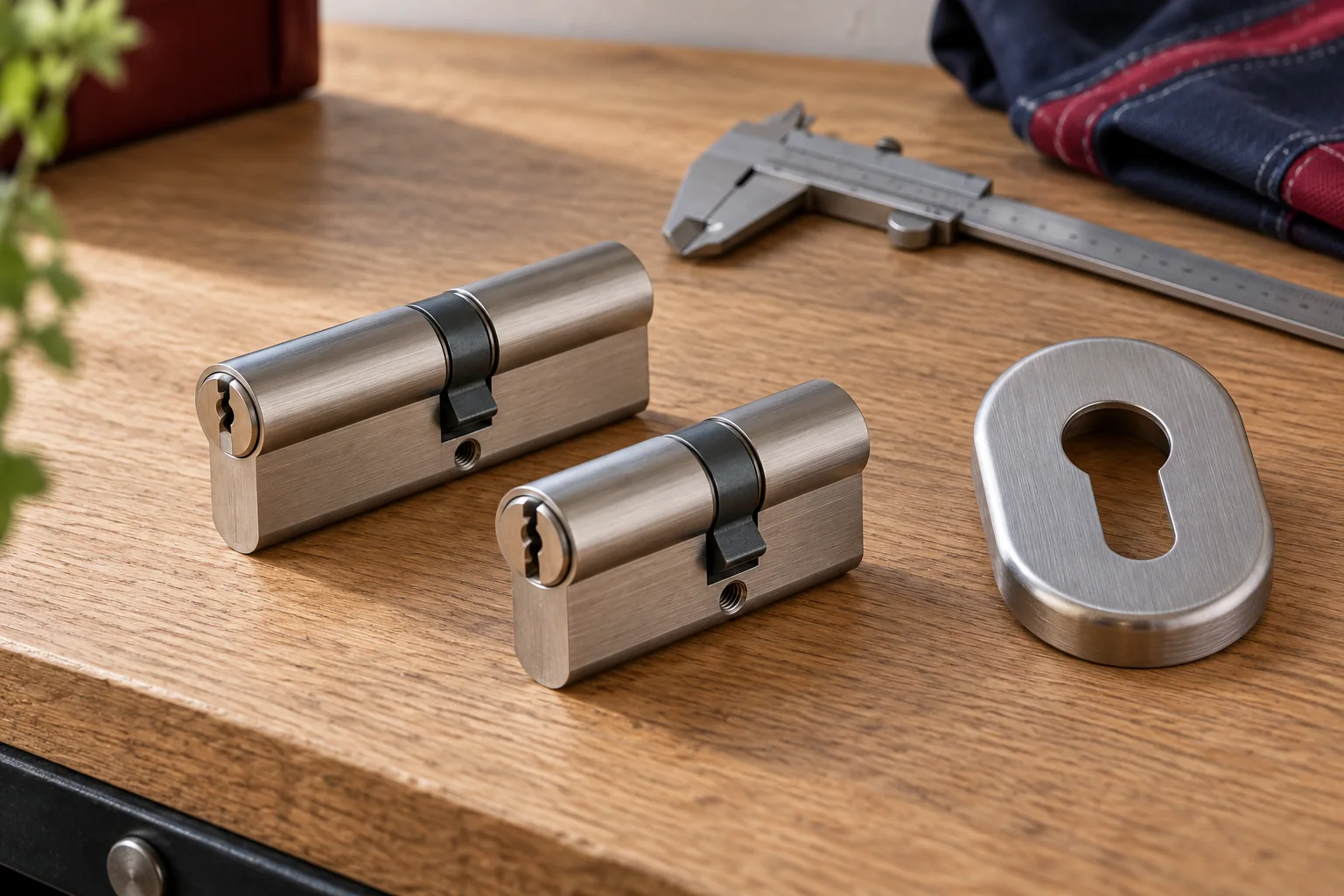
The illustration shows two cylinders of different lengths beside a separate fitting. A European profile does not mean one universal size; the pictured parts are not presented as a compatible or certified assembly.
ABUS relates cylinder length to door and fitting thickness. The dimensions on each side must be checked. Do not order from overall length alone or from a resemblance to a photograph.
Also specify whether you need an internal thumbturn, operation while another key is inserted on the opposite side or a connected device. These functions depend on the model; its outside shape does not establish them.
Cylinder, lock and locking points
The cylinder accepts the key; the lock operates the locking components. Replacing a compatible cylinder can change which keys work without replacing the whole mechanism. A multipoint lock secures several positions. The number of points alone is not a resistance rating.
Check the certification
Ask for the exact product reference and certificate. CNPP explains that each A2P product reference is certified individually: a brand name is insufficient. Check the components allowed in the certified assembly and the fitting instructions.
CNPP — A2P — official documentation
Prepare for the assessment
Photograph the lock, door edge and visible references without dismantling a jammed mechanism. Mention a dragging door, a key that is difficult to turn, shared access or special exit requirements. These details help distinguish adjustment, replacement and reinforcement.
Before deciding
Check shared-door requirements with the manager and policy requirements with your insurer. For a smart lock, also check compatibility, power supply and emergency access.