
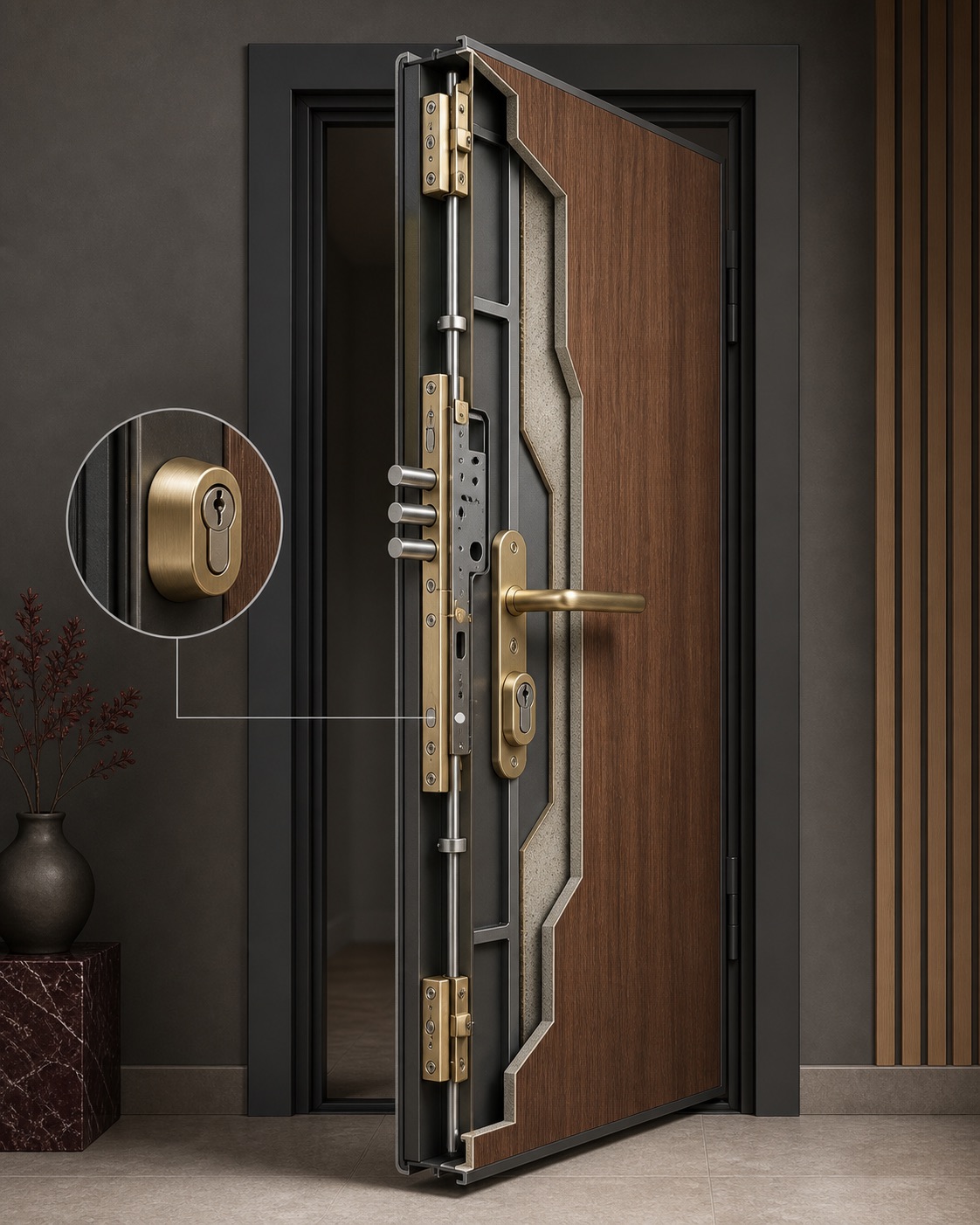
Burglary prevention: measures that actually work
How to prevent a burglary in Brussels? Weak points of a door, certified cylinder and lock, door reinforcement, anti-intrusion reflexes and deterrents. Expert locksmith guide.
The best intervention after a burglary is the one you never have to call. In Brussels, most break-ins happen through the front door and almost always exploit the same weaknesses. The good news: those weaknesses are well known, and a few targeted measures are enough to deter the vast majority of burglars. Here's what really works, based on what we see in the field.
Understanding how a burglar thinks
A burglar looks for the least risk for the greatest gain. Most act in a matter of minutes and give up if the break-in takes too long or makes too much noise. The figures are clear: a door that holds out for 3 to 5 minutes drives away the great majority of intruders. The whole point of prevention is therefore to turn your entrance into an obstacle that's "too long, too risky".
A door's classic weak points
During our on-site assessments in Brussels, we almost always find the same flaws:
- A protruding cylinder sticking out of the escutcheon: it's target number one (snapping, pulling). A cylinder protruding more than 3 mm can be attacked in seconds.
- An entry-level cylinder with no protection against picking, bumping and drilling.
- A single-point lock: a single bolt won't withstand a crowbar.
- Standard hinges on the outside, easy to lift off.
- A soft-wood frame that gives way at the strike plate.
The genuinely effective measures
1. A certified anti-intrusion cylinder
This is the best value-for-money investment. A certified cylinder (anti-picking, anti-bumping, anti-drilling, anti-pulling) holds out where a basic model gives way in seconds. To choose well, see our guide on how to choose a security lock.
2. A multipoint lock
Locking the door at 3, 5 or 7 points spread over its height changes everything against a crowbar. Each point adds break-in time. It's one of the most deterrent protections — see our dedicated guide on the multipoint lock.
3. Door reinforcement
No need to replace the door: reinforcement strengthens the existing door (steel plate, anti-pry angle bar, anti-lift pins). Full reinforcement delays a break-in by 10 to 20 minutes — well beyond the give-up threshold.
4. Always lock with the key
A free yet neglected habit: when leaving home, double-lock, don't just engage the latch bolt. Many "trace-free" break-ins are in fact doors that were simply pulled shut. It's also a condition of your insurance.
The deterrents (as a complement)
- Motion-detection outdoor lighting around access points.
- A visible alarm: the mere presence of a siren or a sticker is a deterrent.
- A presence simulator (timers on the lighting) during long absences.
- No hidden key under the doormat or in a plant pot — burglars know every hiding place.
- Discretion on social media: don't announce your holiday dates publicly.
The right reflexes specific to Brussels
In an apartment, the security of the landing door comes first (that's where it happens, not via the building's front door). In a house, also watch the secondary access points: garage door, garden door, ground-floor windows. Several Brussels municipalities offer a theft-prevention adviser who carries out a free audit of your home: ask your municipal administration or your police zone.
If the worst happens anyway, our guide on what to do after a burglary details the steps. And for a concrete assessment of your weak points, one of our technicians comes by in Brussels or Brabant, examines the door, cylinder and frame, and tells you clearly what to strengthen — without forcing anything on you. Call 0495 205 400.
Need a locksmith now?
We arrive in 30 minutes in Brussels and surroundings