
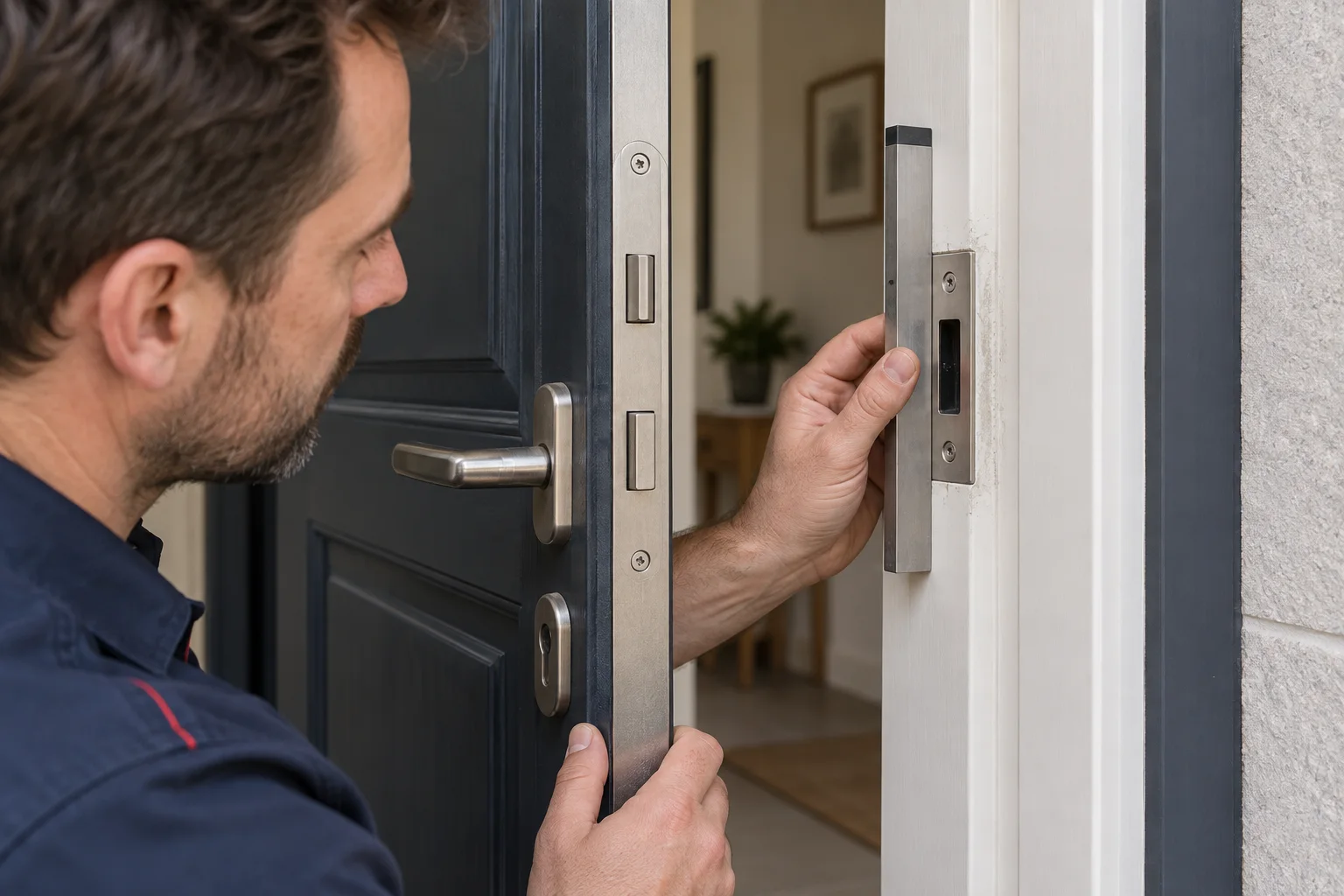
The door stays shut, but the key cannot complete its turn. The handle resists, or the bolt catches the frame instead of engaging. Similar symptoms do not automatically mean the same fault. Explain whether you can still open, close and lock the door: these are separate observations.
The door is shut: is it actually locked?
A door staying closed does not confirm that it is locked. Stop repeated attempts if the key bends, the handle needs force or the mechanism makes an unusual noise. If the door cannot be secured, mention this at the start of the call so the priority can be assessed.
If you cannot get in, describe that to our blocked door service. If you are inside and cannot exit normally, say so too. Access, address and availability are confirmed before a visit.
Observations that do not make the fault worse
If the door is already open and can safely remain open, note rubbing, loose parts and where resistance begins. Do not close a faulty door just to reproduce the problem. Do not manually trigger an automatic lock; follow the manager’s instructions for fire or communal doors.
A difference between operation with the door open and shut is useful information, not proof that the lock is undamaged. Resistance in both positions may require inspection of the key, cylinder and lock case; see a lock that will not turn.
Rubbing, movement or a recent change
Describe where the door rubs: the floor, handle side or top of the frame. Mention recent building work, an impact, a replaced seal or changes with the weather. These observations help prepare the inspection without establishing that the timber or hinges caused the fault.
Do not lift the door by its handle, shoulder it, file the strike plate or move its screws at random. The illustration shows an assessment of the strike plate and frame, not an adjustment to copy yourself.
Handle, cylinder or multipoint mechanism?
A moving handle that does not operate the locking points, a stiff key and a catching bolt should be described separately. Replacing a cylinder will not necessarily resolve a lock-case or alignment problem. Ask which part has failed and how it was identified.
In its technical FAQ, Winkhaus says it supplies complete mechanisms rather than separate gearboxes. This illustrates a manufacturer constraint: the proposed repair depends on the reference, compatible parts and availability.
What should the checks after repair establish?
Ask which tests were performed under the model’s instructions. The KFV procedure for checking locking elements separates checks with the door open and shut. A procedure for one product does not automatically apply to yours.
Before the technician leaves, have closing, locking and unlocking checked from the intended sides, together with any keys supplied. Explain access and exit requirements before changes to a communal, automatic or fire door.
Preparing the call and agreeing on the work
Prepare the address, door type, current position, symptoms and any visible reference. An overall view and a photo of the strike plate can help; do not dismantle anything to take them, and hide personal information. Involve the manager or owner where their approval needs arranging.
Ask whether the quote covers adjustment, a part or lock replacement, including the total and the scope of work. Our locksmith quote guide helps prepare that discussion. The symptom alone cannot establish the duration or solution.